

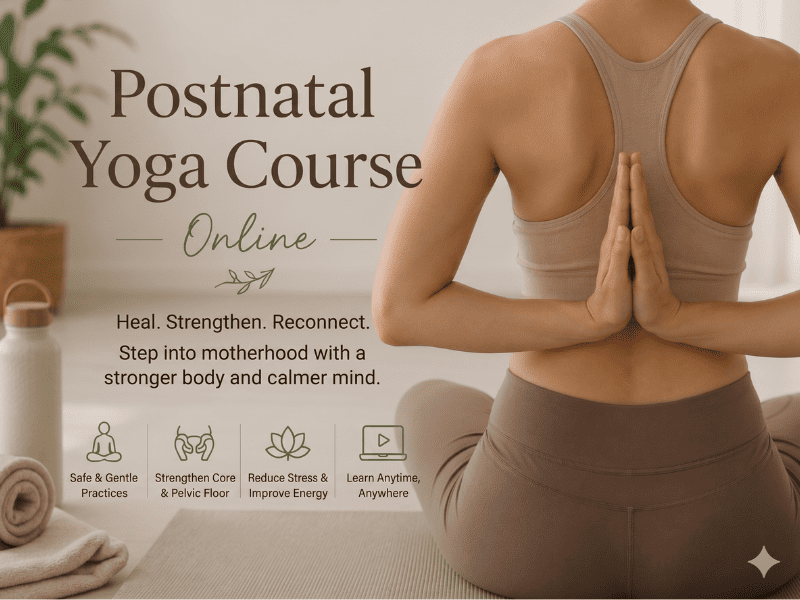
You just did something extraordinary. You grew and delivered a human being. And now, while the world around you rushes forward, your body is quietly asking for something it rarely gets — real, thoughtful recovery.
A postnatal yoga course online gives you exactly that. Not a generic workout. Not pressure to bounce back. A structured, expert-led programme built entirely around what your postpartum body actually needs — from the comfort of your home, at your own pace, around your baby’s schedule.
The Postnatal Yogalates Course by Rashmi Ramesh is designed for every new mother — whether you had a normal delivery or a C-section, whether it has been 8 weeks or 18 months, whether you have never exercised before or you are returning after years away. This course meets you where you are and takes you, step by step, to where you want to be.
Online Postnatal Yoga Course for New Mothers — What Makes This Different
Most fitness programmes ignore the specific realities of postpartum recovery. They treat a new mother like any other beginner — missing the pelvic floor damage, the diastasis recti, the hormonal shifts, and the deep exhaustion that make standard exercise genuinely inappropriate in the early postnatal weeks.
This online postnatal yoga course is built differently. It combines yoga’s breathwork, flexibility, and stress relief with Pilates-based core rehabilitation — a method called Yogalates — to create a complete postnatal fitness course that is safe, progressive, and built entirely around the postpartum body.
Furthermore, because it is fully online with lifetime access, it works around your schedule and your baby — not the other way around.
Post Pregnancy Workouts You Can Do at Home
One of the most common reasons new mothers do not exercise is logistics. Getting to a studio requires childcare, travel time, and energy that most new mums simply do not have. This post pregnancy yoga course removes every one of those barriers.
All you need is a yoga mat and a small space at home. Every session in this postnatal workout program is led by Rashmi on video, with clear technique guidance and postnatal-specific modifications throughout.
Whether you practice during your baby’s nap, before the household wakes, or after the children are in bed — this postnatal yoga at home programme works around your life, not against it.
Postnatal Yoga for Core, Back and Pelvic Floor Strength
These are the three areas that postnatal recovery depends on most. This postpartum yoga course addresses all three in a logical, progressive sequence.
Postnatal Yoga for Pelvic Floor Strength
Postnatal pelvic floor exercises in this course begin gently, with breath-led activation that is safe from the earliest weeks of recovery. Moreover, because these exercises are taught by an expert rather than described in a leaflet, students learn to engage the right muscles correctly — something most new mums never receive proper guidance on.
This is the foundation of the entire postnatal fitness programme. Everything else builds from here.
Postnatal Core Strengthening
Postnatal core strengthening in the Yogalates method targets the transverse abdominis — the deepest layer of the abdominal wall — using Pilates-based techniques that heal the separation safely. Importantly, this approach avoids crunches, sit-ups, and the traditional ab exercises that can worsen diastasis recti.
If you have been struggling with postpartum belly fat that does not seem to change no matter what you do, diastasis recti is very likely the underlying reason — and this postpartum core exercises programme addresses it directly.
Postnatal Yoga for Back Pain Relief
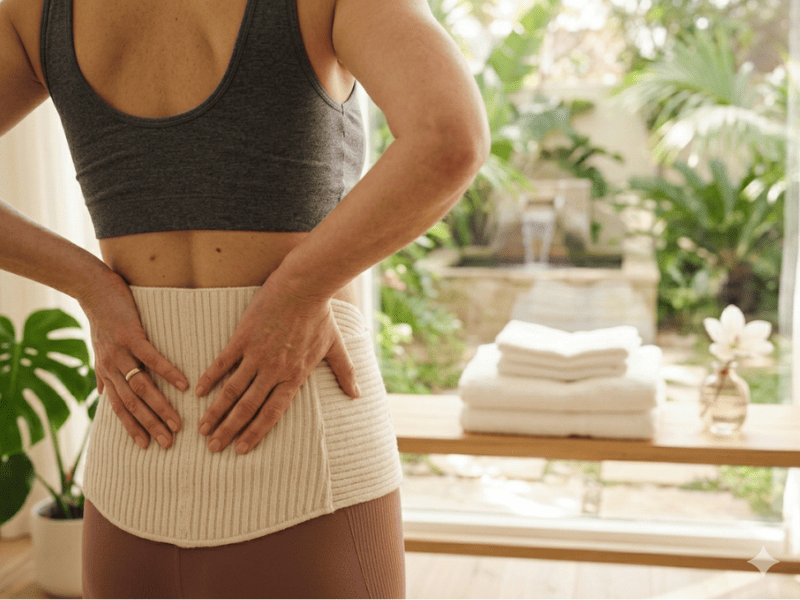
Back pain after pregnancy is extremely common — and almost entirely overlooked by standard postnatal advice. The combination of a changed centre of gravity during pregnancy, relaxin-loosened joints, and months of feeding, carrying, and lifting creates significant strain through the lower back, mid-back, and neck.
Postnatal yoga for back pain in this course releases the tension patterns that drive this pain and simultaneously rebuilds the supporting muscles that prevent it from returning. Students consistently report significant reduction in back pain within the first 3 to 4 weeks of the programme.
Gentle Postpartum Fitness Program for Body Recovery
Recovery is not a race. This gentle postnatal workout course online is built on the principle that intelligent, progressive movement — started at the right time and done consistently — produces better long-term results than any high-intensity approach taken too soon.
The postpartum fitness program is structured in phases:
Phase 1 — Reconnect (Weeks 1–3) Breathwork, pelvic floor awareness, and gentle mobility. The nervous system begins to regulate. Energy starts to return. This phase is the most important and the most overlooked.
Phase 2 — Rebuild (Weeks 4–7) Deep core activation, spinal strengthening, postural correction. The body begins to feel like yours again.
Phase 3 — Restore (Weeks 8–12) Full-body Yogalates flows that build strength, flexibility, and fitness — all within a postnatal-safe framework.
Additionally, for mums who want to continue after completing the core programme, the 21 Days Yogalates Challenge and Beginner Yogalates Course are ideal next steps.
Postnatal Yoga After Normal Delivery and C-Section
Postnatal Yoga After Normal Delivery
After a vaginal birth, the body is typically ready for structured postnatal yoga after normal delivery from around the 6-week mark — following your postnatal check and with your healthcare provider’s clearance. Gentle breathwork and pelvic floor awareness can begin earlier, usually within the first week as tolerated.
After delivery yoga exercises at home in this programme begin with zero impact and progress at a pace that respects the body’s genuine recovery timeline.
Postnatal Yoga After C-Section Recovery
Postnatal yoga after C-section requires a more conservative approach because of the layers of tissue that have been surgically cut and must heal. The general guideline is to wait 8 to 10 weeks before beginning structured exercise, though breathwork and very gentle pelvic floor work can begin earlier.
This postpartum workout after C-section programme includes specific modifications and guidance for C-section mothers throughout. The early sessions place no pressure on the healing scar tissue and progress gradually as the body heals.
Importantly, gentle exercises after C-section are not just safe — they are beneficial. Movement supports circulation, reduces the risk of adhesions, and begins the reconnection process that the body needs after abdominal surgery.
Postnatal Yogalates for Strength and Flexibility
Yogalates — the method at the heart of this postnatal yoga course online India — combines yoga and Pilates in a way that is uniquely suited to postnatal recovery.
Yoga contributes: breathwork, nervous system regulation, deep stretching, stress reduction, and the mindful awareness that helps new mothers reconnect with their bodies.
Pilates contributes: targeted core rehabilitation, pelvic floor strengthening, postural correction, and controlled progressive movement that builds genuine functional strength.
Together, they create a postnatal fitness program online that addresses every dimension of recovery — physical, emotional, and neurological — in a single, cohesive practice.
This is why the postnatal yogalates course produces results that neither yoga alone nor Pilates alone can fully deliver.
For a deeper understanding of how Yogalates works, read: How Yogalates Is Transforming Modern Fitness Routines in 2026
Who Can Join This Postnatal Yoga Course?
This postnatal yoga course for beginners and experienced practitioners alike is right for you if:
- You are at least 6 weeks postpartum after vaginal birth, or 8–10 weeks after C-section, with your doctor’s clearance
- You want to rebuild core strength safely, including if you have diastasis recti
- You are dealing with pelvic floor weakness including leaking, heaviness, or pressure
- You have postnatal back pain that has not resolved since delivery
- You are a first-time mother with no prior exercise experience
- You are a working mum who needs something short, effective, and home-based
- You had a previous pregnancy and are still dealing with unresolved postnatal issues
- You are outside India — this is a global online postnatal yoga course available to students in the UK, UAE, Australia, Singapore, USA, and worldwide
No prior yoga experience is needed. No equipment is required. The only things you need are a mat, a small space, and 20–35 minutes per session.
Benefits of Postnatal Yoga for New Moms
The benefits of enrolling in a postnatal yoga course online extend across every area of a new mother’s wellbeing:
Physical Benefits:
- Restores pelvic floor strength and reduces incontinence
- Heals diastasis recti through safe core rehabilitation
- Reduces postnatal back pain and neck tension
- Improves posture damaged by pregnancy and feeding
- Builds full-body strength and flexibility progressively
- Supports healthy, gradual postpartum belly fat reduction through core activation and improved metabolism
Mental and Emotional Benefits:
- Reduces postnatal anxiety through breathwork and nervous system regulation
- Improves sleep quality — even with a newborn
- Restores a sense of self, ownership, and identity
- Provides a consistent daily practice that belongs entirely to you
Practical Benefits:
- Fully online with lifetime access — practice any time, any day
- No gym, studio, or equipment required
- Sessions are 20–35 minutes — realistic for new mum schedules
- Available globally — postnatal yoga classes online India and worldwide
- Suitable from complete beginner to previous yoga practitioners
What You Get When You Enroll
When you enroll in this postnatal yoga course online, you receive:
- Lifetime access to all video sessions — no expiry, no time pressure
- Progressive structured programme — each session builds safely on the last
- Expert instruction from Rashmi Ramesh — India’s leading Yogalates educator
- Postnatal-specific guidance — modifications for C-section, diastasis recti, and pelvic floor issues throughout
- No equipment needed — just your mat and a small space at home
- Global access — stream on any device from anywhere in the world
For new mothers who want live, real-time sessions with Rashmi and the energy of a community, the Live Sessions programme is available alongside this course.
Lorem ipsum dolor sit amet, consectetur adipiscing elit. Ut elit tellus, luctus nec ullamcorper mattis, pulvinar dapibus leo.
Complete Your Motherhood Wellness Journey
The postnatal course is one part of a complete wellness journey. Yogalates with Rashmi has programmes for every stage:
Still pregnant? → Prenatal Yoga Course — safe, trimester-by-trimester movement for a healthier pregnancy and birth
Want the complete journey? → Beyond the Bump Masterclass — full prenatal + postnatal programme in one
Need rest alongside recovery? → Restore & Relax Course — restorative yoga and meditation for deep nervous system recovery
Ready to build strength after recovery? → 12 Week Fitness Project — complete body transformation
Postnatal Yoga Course FAQs
Q1: What is a postnatal yoga course?
A postnatal yoga course is a structured exercise programme designed specifically for women recovering from pregnancy and childbirth. Unlike general fitness programmes, it focuses on the areas most affected by pregnancy — the pelvic floor, deep core, back, and posture — while also supporting emotional recovery through breathwork and mindful movement. A quality online postnatal yoga course like the Yogalates programme delivers all of this through guided video sessions you can practice at home.
Q2: When can I start postnatal yoga after delivery?
After a vaginal birth, gentle breathwork and pelvic floor awareness can begin within the first week as tolerated. Structured postnatal yoga after normal delivery — including the full course content — is typically safe from your 6-week postnatal check with your healthcare provider’s clearance. After a C-section, wait 8 to 10 weeks before beginning structured movement, always with medical clearance.
Q3: Is postnatal yoga safe after C-section?
Yes, with correct timing and appropriate modifications. Postnatal yoga after C-section begins with breathwork and pelvic floor activation that place no pressure on the healing scar tissue. The course includes specific C-section guidance throughout and progresses at a pace that respects caesarean recovery.
Q4: Can beginners join an online postnatal yoga course?
Absolutely. This postnatal yoga course for beginners requires no prior yoga, Pilates, or fitness experience. Every session is demonstrated clearly with full technique guidance and postnatal-specific modifications. If you can breathe and lie on a mat, you can begin.
Q5: Can postnatal yoga help with belly fat?
Yes — but not in the way most fitness marketing suggests. Postpartum yoga for belly fat reduction works through multiple pathways: rebuilding the deep core muscles that support a flat, functional abdomen; addressing diastasis recti (which causes a persistent belly pouch that no amount of crunches will fix); reducing cortisol levels that drive stress-related fat retention; and improving digestion and metabolism. Combined with adequate nutrition, this approach produces real, sustainable results.
Enroll in the Postnatal Yoga Course Online Today
Your body has given everything. Now it is time to give something back to it.
Enroll in our postnatal yoga course online and begin the structured, expert-led recovery programme that thousands of new mothers have used to rebuild strength, restore energy, and reconnect with their bodies — at home, at their own pace, around their baby’s schedule.