

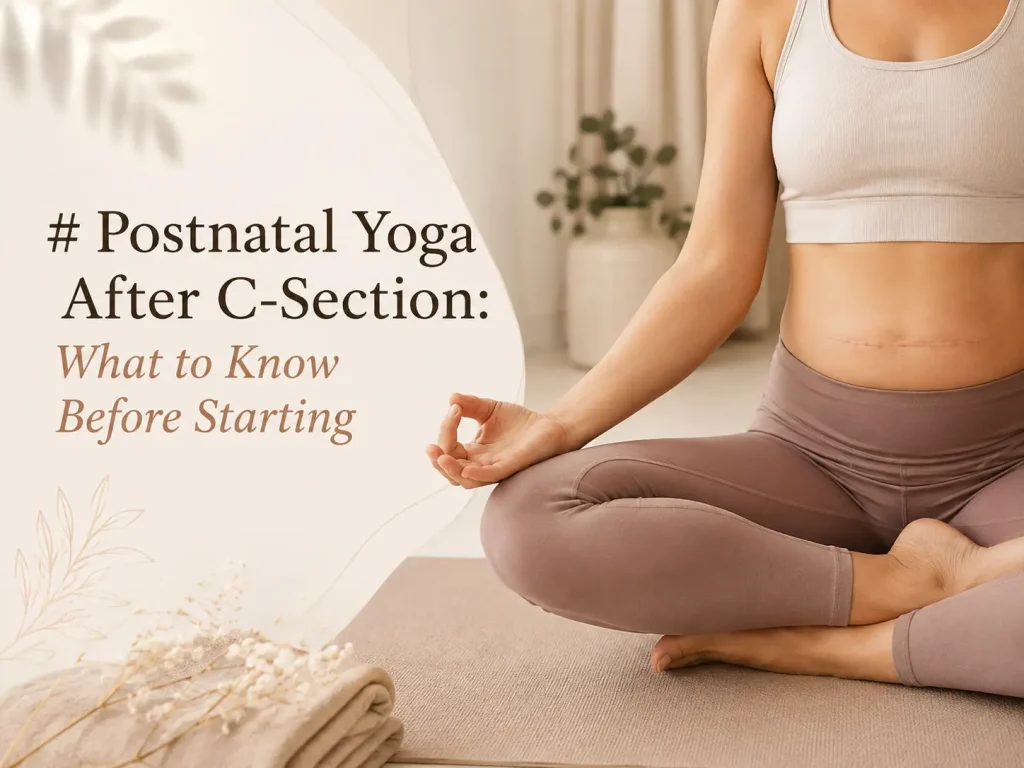
Becoming a mother changes everything — including how your body feels, moves, and heals. If you had a cesarean delivery, your recovery journey looks a little different from a vaginal birth, and that’s completely normal. Many new moms ask the same question: “When can I start postnatal yoga after a C-section, and is it even safe?”
The good news is yes — postnatal yoga after C-section recovery is not only safe, but incredibly beneficial when done the right way, at the right time, with the right guidance. In this guide, we’ll walk you through everything you need to know before rolling out your mat: recovery timelines, signs your body is ready, safe poses to begin with, movements to avoid, and how a structured program can make your healing journey smoother and more consistent.
How Is Recovery Different After a C-Section vs. Normal Delivery?
A cesarean section is major abdominal surgery. While a vaginal delivery primarily affects the pelvic floor and perineal area, a C-section involves incisions through skin, fat, connective tissue, and the abdominal muscles themselves. This means:
- Your core muscles have been directly cut and stitched back together
- Scar tissue forms over the incision site, which can affect mobility and sensation
- Internal healing takes longer than the visible external scar suggests
- You may experience numbness, tightness, or pulling sensations around the scar for weeks or months
Because of this, c-section recovery exercises need to be gentler and more gradual than what’s recommended after a vaginal birth. Rushing into core-focused workouts too early can interfere with healing, increase the risk of hernia, or worsen issues like diastasis recti (the separation of abdominal muscles that happens during pregnancy).
This is exactly why postnatal yoga — when it’s designed specifically for cesarean recovery — is such a valuable tool. It works with your healing timeline instead of against it.
When Can You Start Yoga After a C-Section?
This is the most important question, and the honest answer is: it depends on your individual healing, but here are general guidelines most healthcare providers follow.
The first 6 weeks: This is considered the primary healing window. Most doctors advise against any structured exercise, including yoga, during this time. Focus should be on rest, gentle walking, and breathing exercises.
Around 6–8 weeks: After your postnatal checkup, if your doctor confirms your incision has healed well and there are no complications, you may get clearance to begin very gentle movement — including beginner-level postnatal yoga.
Beyond 8 weeks: As your strength returns, you can gradually progress to more structured postnatal yoga sequences that include core activation, pelvic floor work, and gentle stretching.
It’s worth repeating: always get a green light from your doctor before starting yoga after a cesarean delivery. Every body heals differently, and factors like complications during surgery, infections, or your overall health can affect the timeline.
Signs Your Body Is Ready for Postnatal Yoga
Beyond the standard 6–8 week mark, look out for these signs that your body may be ready to begin gentle movement:
- Your incision site is fully closed with no redness, swelling, or discharge
- You can walk comfortably for short periods without pain
- You no longer experience sharp or pulling pain during everyday movements like getting up from bed
- Your energy levels are gradually improving (though fatigue from newborn care is normal!)
- Your doctor has given explicit clearance for light exercise
If any of these don’t apply yet, that’s okay — healing isn’t a race. Give your body the time it needs.
Benefits of Postnatal Yoga After C-Section
Once you’re cleared to begin, postnatal yoga offers a wide range of benefits specifically suited to cesarean recovery:
- Gentle core restoration — Yoga helps you reconnect with and gradually rebuild your deep core muscles (the transverse abdominis) without putting strain on the incision site.
- Pelvic floor recovery — Even after a C-section, pregnancy puts pressure on the pelvic floor. Targeted breathing and gentle activation exercises help restore strength and function here.
- Improved posture — Months of carrying a baby bump, followed by hours of breastfeeding and holding your newborn, can lead to rounded shoulders and lower back strain. Yoga helps realign your posture.
- Reduced scar tissue stiffness — Gentle stretching (once cleared) can improve mobility around the scar and reduce that “tight, pulling” sensation many moms describe.
- Better sleep and reduced stress — The breathwork and mindfulness components of yoga are powerful tools for managing the emotional rollercoaster of early motherhood, including postpartum anxiety and exhaustion.
- Increased energy — Gentle movement boosts circulation and can genuinely help combat the fatigue that comes with caring for a newborn.
Safe Yoga Poses to Start With (After Doctor's Clearance)
When you’re ready to begin, start with these gentle, beginner-friendly movements:
Diaphragmatic breathing (belly breathing): Lie on your back with knees bent. Place your hands on your belly and breathe deeply, feeling your belly rise and fall. This reactivates your core gently and is safe from day one (with doctor approval).
Pelvic floor activation (Kegels): Gentle contraction and release of the pelvic floor muscles, done lying down, helps restore function without straining the abdomen.
Modified cat-cow (seated or on hands and knees, gentle range): A slow, controlled spinal movement that improves mobility in the back without putting pressure on the abdominal scar.
Supine leg slides: Lying on your back, slowly sliding one heel along the floor and back, engaging the core gently.
Gentle neck and shoulder rolls: Releases tension built up from feeding and holding your baby.
Reclined butterfly pose: A relaxing hip-opener that can be done lying down, great for releasing tension in the lower body.
These movements form the foundation of a safe postnatal yoga practice and are exactly the kind of sequences included in a guided program designed for new mothers.
Poses and Movements to Avoid in Early Recovery
Just as important as knowing what to do is knowing what to avoid — especially in the first few months:
- Deep twists — These can place unwanted pressure on the healing abdominal tissue
- Full boat pose, crunches, or sit-ups — Direct, intense core contractions can strain the incision and worsen diastasis recti
- Backbends and deep stretches over the abdomen — Poses like camel or upward-facing dog put direct tension on the scar area
- Inversions (headstands, shoulder stands) — These should be avoided until you’ve fully healed and rebuilt core strength
- High-impact or fast-paced sequences — Anything that causes jarring movement or bouncing
- Holding your breath during poses — This increases intra-abdominal pressure, which isn’t ideal during healing
If any movement causes pain, pulling at the incision site, or discomfort, stop immediately and consult your doctor.
How Postnatal Yoga Helps Heal Diastasis Recti and Pelvic Floor Issues
Diastasis recti — the gap that forms between the left and right sides of the abdominal muscles during pregnancy — is extremely common after both vaginal and cesarean deliveries. The good news is that gentle, targeted postnatal yoga can help close this gap over time by safely reactivating the deep core muscles.
Similarly, pelvic floor dysfunction (which can cause issues like urinary leakage or a feeling of heaviness) responds well to consistent, gentle pelvic floor exercises woven into a yoga practice. The key word here is consistent — a few minutes of correct movement daily is far more effective than occasional intense sessions.
Tips Before Starting Your Postnatal Yoga Practice
- Get written or verbal clearance from your doctor before beginning any exercise
- Start with 10–15 minutes a day and gradually increase as your body adapts
- Always listen to your body — some days will feel easier than others, and that’s normal
- Wear comfortable, breathable clothing that doesn’t press on your incision
- Keep a water bottle nearby, especially if you’re breastfeeding
- Practice on a soft mat to protect your joints and lower back
- Be patient — postpartum healing, especially after surgery, takes time
Why Guided Online Postnatal Yoga Is Safer Than Random Videos
With so much content available online, it’s tempting to just pick any “postnatal yoga” video and follow along. But after a C-section, generic videos can do more harm than good if they don’t account for surgical recovery, scar tissue, or individual progression.
A structured, guided program — like the Postnatal Yoga course by Yogalates with Rashmi — is built specifically with new mothers in mind, including those recovering from cesarean delivery. These programs progress safely week by week, focusing on rebuilding core strength, restoring pelvic floor function, and helping you regain energy — all from the comfort and convenience of home, with no equipment needed.
If you’re also someone who’s curious about yoga in general or want to explore beginner-friendly options before diving into postnatal-specific routines, you can also check out other beginner-friendly Yogalates programs designed to ease you back into movement at your own pace.
And if you’re reading this while still pregnant and planning ahead, it’s worth exploring the Prenatal Yoga course too — preparing your body during pregnancy can make postpartum recovery noticeably smoother.
Conclusion
Recovering from a C-section is a journey that deserves patience, care, and the right kind of movement. Postnatal yoga, when started at the right time and guided correctly, can be one of the most powerful tools for rebuilding your core strength, restoring your pelvic floor, easing scar tissue stiffness, and supporting your emotional wellbeing during one of the most transformative periods of your life.
Remember: always consult your doctor before starting, begin gently, and be consistent rather than intense. Your body has done something incredible — give it the gentle care it deserves to heal fully.
Ready to start your recovery journey safely? Explore the Postnatal Yoga course by Yogalates with Rashmi and take the first step toward feeling strong, balanced, and energized again — all from home.
Frequently Asked Questions
Q1: When can I start postnatal yoga after a C-section?
Most doctors recommend waiting at least 6–8 weeks, and you must get clearance from your doctor before starting any postnatal yoga practice.
Q2: Is yoga safe after a C-section?
Yes, gentle, guided postnatal yoga is safe and beneficial after a C-section, but it should begin with breathing and pelvic floor activation before progressing to core work.
Q3: What yoga poses should I avoid after a C-section?
Avoid deep twists, intense core exercises like crunches or full boat pose, and any poses that put pressure directly on the scar area in the early weeks.
Q4: How does postnatal yoga help C-section recovery?
It helps rebuild core strength, restore pelvic floor function, improve posture, reduce scar tissue stiffness, and support emotional wellbeing during recovery.
Q5: Can I do postnatal yoga at home after a C-section?
Yes, with a structured, guided online program designed specifically for postpartum recovery, you can safely practice from home without needing a gym or equipment.