

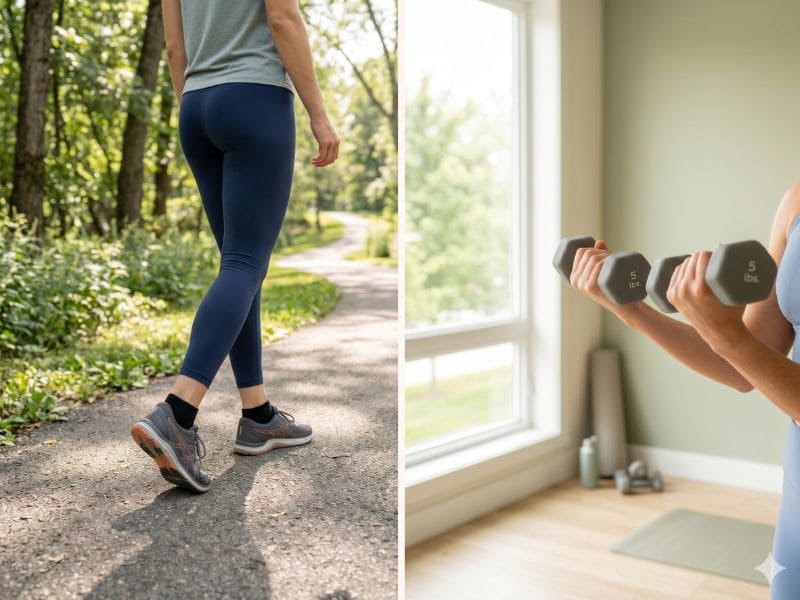
Is Walking Enough for Fitness? Here's What You're Missing (And How to Fix It)
Walking 10,000 steps a day? That’s a great start — but if you’re not seeing real results, here’s the honest truth no one tells you.
You wake up every morning, lace up your shoes, and go for a walk. You’re hitting your step goals. You feel good. But months later, the weight hasn’t loose much. Your arms still feel flabby. You’re tired faster than expected.
Sound familiar?
If you’ve been wondering “is walking enough for fitness?” — you’re asking exactly the right question. And the answer will change how you approach your health forever.
Walking is wonderful. But it’s not the complete picture.
In this guide, I’ll break down exactly what walking does for your body, where it falls short, why strength training is the missing piece — and how to combine both for real, lasting results. Whether you’re a beginner in Mumbai or anywhere else, this is the fitness truth you need in 2025.
What Does Walking Actually Do for Your Body?
Before we talk about limitations, let’s give walking the credit it deserves.
Walking is one of the most natural, low-impact, and accessible forms of movement on the planet. Here’s what it genuinely does well:
Walking benefits include:
- Improves heart health and lowers blood pressure
- Supports fat burning during moderate activity
- Reduces stress, anxiety, and cortisol levels
- Boosts mood through endorphin release
- Supports blood sugar regulation
- Helps with digestion and gut health
- Improves sleep quality over time
- Lowers risk of type 2 diabetes and cardiovascular disease
A brisk 30–45 minute walk, done consistently 5 days a week, absolutely supports your overall health. For complete beginners, walking is often the perfect entry point into movement.
But here’s the problem that nobody talks about enough…
Why Walking Alone Is Not Enough for Complete Fitness
Walking is primarily a cardiovascular exercise — it trains your heart and lungs. But complete fitness has five components:
- Cardiovascular endurance (walking covers this)
- Muscular strength
- Muscular endurance
- Flexibility
- Body composition
Walking only checks one box.
The Adaptation Problem
Here’s what happens when you only walk: your body gets better at walking. It becomes more efficient — and that means it burns fewer calories doing the same walk over time. This is called the adaptation plateau, and it’s why so many people walk religiously but stop losing weight after the first few weeks.
What Walking Doesn’t Build
- Muscle strength — walking does not challenge your muscles enough to build or maintain them
- Bone density — especially critical for women over 35, where bone loss accelerates
- Resting metabolism — without muscle, your body burns fewer calories at rest
- Upper body strength — walking works mostly your legs, leaving arms, back, and core undertrained
- Hormonal balance — strength training uniquely helps regulate insulin sensitivity and hormones like estrogen and cortisol
The conclusion? Walking keeps you moving. Strength training transforms your body.
What Is Strength Training? (And It's NOT Just for Gym Lovers)
Strength training — also called resistance training — is any exercise that forces your muscles to work against resistance. This does NOT mean you need heavy dumbbells or a gym membership.
Strength training includes:
- Bodyweight exercises: squats, lunges, push-ups, planks, glute bridges
- Resistance bands (affordable and home-friendly)
- Light dumbbells or water bottles at home
- Yoga and Pilates-based strength movements
- Yogalates workouts that combine core strength with flexibility
Strength training is for every woman, regardless of age, fitness level, or body type — especially women in India who prefer home-based, low-equipment workouts.
8 Powerful Benefits of Strength Training (Backed by Science)
1. Builds and Preserves Lean Muscle
After age 30, women lose up to 3–5% of muscle mass per decade. Strength training directly combats this, keeping you strong, toned, and functional as you age.
2. Boosts Your Resting Metabolism
Every kilogram of muscle burns more calories at rest than fat tissue. More muscle = higher metabolism = easier fat loss — even while you sleep.
3. Supports Faster and Lasting Fat Loss
While walking burns calories during the activity, strength training creates an afterburn effect (EPOC — Excess Post-exercise Oxygen Consumption) that keeps your metabolism elevated for hours after your workout ends.
4. Strengthens Bones and Prevents Osteoporosis
Weight-bearing strength exercises stimulate bone growth and increase bone density — critical for Indian women who are statistically at higher risk for osteoporosis.
5. Improves Posture and Reduces Back Pain
Strengthening your core, glutes, and back muscles directly fixes the rounded shoulders and lower back pain so common from sitting at a desk all day.
6. Reduces Risk of Injury
Stronger muscles support your joints. This means fewer knee problems, less ankle instability, and lower injury risk — both in daily life and during exercise.
7. Balances Hormones
Research shows strength training improves insulin sensitivity, reduces cortisol (the stress hormone), and supports healthy estrogen levels — especially important for women dealing with PCOS, thyroid issues, or perimenopause.
8. Improves Mental Health and Confidence
Beyond the physical, strength training is linked to reduced depression, better body image, and stronger self-confidence. There’s something deeply empowering about feeling physically strong in your own body.
Walking vs. Strength Training: Side-by-Side Comparison
Lorem ipsum dolor sit amet, consectetur adipiscing elit. Ut elit tellus, luctus nec ullamcorper mattis, pulvinar dapibus leo.
| Fitness Goal | Walking | Strength Training |
|---|---|---|
| Heart health | Excellent | Good |
| Fat loss | Moderate | Faster (long-term) |
| Muscle building | Minimal | High |
| Bone density | Low-moderate | High |
| Metabolism boost | Temporary | Long-term |
| Posture & core | Minimal | Significant |
| Hormone balance | Some | Significant |
| Equipment needed | None | Minimal/none |
| Beginner-friendly | Yes | With guidance |
Verdict: You need BOTH. They complement each other perfectly.
The Winning Formula: Walking & Strength Training for Complete Fitness
The answer is not “walking vs strength training” — it’s walking AND strength training working together.
Here’s how they combine:
- Walking maintains heart health, manages daily stress, and supports active recovery
- Strength training builds muscle, speeds up metabolism, and reshapes your body
- Together, they create a balanced, sustainable fitness routine that delivers real results
This exact combination is the foundation of Yogalates — the method I teach at Yogalates With Rashmi. Yogalates blends yoga’s flexibility and mindfulness with Pilates-style strength and core conditioning. It’s the perfect home-based system for women who want to walk, move, and build strength without stepping into a gym.
Your Beginner-Friendly Weekly Plan (No Gym Needed)
Here’s a simple, realistic plan you can start this week:
Weekly Schedule
| Day | Activity | Duration |
|---|---|---|
| Monday | Brisk Walk | 30–40 mins |
| Tuesday | Strength Training (lower body focus) | 25–30 mins |
| Wednesday | Walk + Light Stretching | 30 mins |
| Thursday | Strength Training (upper body + core) | 25–30 mins |
| Friday | Brisk Walk | 30–40 mins |
| Saturday | Yogalates full body session | 30–45 mins |
| Sunday | Rest or gentle yoga/walk | 20 mins |
Beginner Strength Exercises (Home-Based)
Lower Body:
- Squats (3 sets × 12 reps)
- Reverse lunges (3 sets × 10 each leg)
- Glute bridges (3 sets × 15 reps)
- Wall sit (3 × 30 seconds)
Upper Body:
- Modified push-ups (3 sets × 10)
- Tricep dips on chair (3 × 12)
- Resistance band rows (3 × 12)
Core:
- Plank hold (3 × 20–30 seconds)
- Dead bug (3 × 8 each side)
- Bird dog (3 × 10 each side)
No weights? No problem. Start with your bodyweight. Consistency beats equipment every time.
Common Mistakes That Are Holding You Back
Mistake 1: I walk daily, so I don’t need to do anything else. Walking is great, but it doesn’t build the muscle your body needs to function well at every age.
Mistake 2: Strength training will make me bulky. This is one of the biggest fitness myths. Women don’t have enough testosterone to bulk up from regular strength training. You’ll get toned, strong, and lean — not bulky.
Mistake 3: Doing the same walk at the same pace every day. Your body adapts quickly. Add hills, increase speed, or add a loaded backpack to keep challenging it.
Mistake 4: Skipping rest and recovery. Muscles grow during rest, not during exercise. Rest days are not lazy days — they’re productive days.
Mistake 5: Waiting until you’re fit enough to start strength training. There is no perfect starting point. Start where you are, with what you have.
How Yogalates Gives You Both — In One Workout
If you’re looking for a workout method that combines cardio, strength, flexibility, and mindfulness — all from home — Yogalates is exactly that.
Yogalates = Yoga & Pilates
- Yoga elements bring flexibility, breathing, and stress relief
- Pilates elements bring core strength, posture correction, and muscle endurance
- Together, they create a full-body workout that is accessible for beginners and challenging for advanced students
My programs at Yogalates With Rashmi are specifically designed for Indian women who want real results without a gym — including those managing PCOS, postnatal recovery, or post-40 fitness needs.
Frequently Asked Questions
Q1: Is 30 minutes of walking a day enough exercise?
30 minutes of brisk walking daily is a great cardiovascular habit, but it’s not sufficient for complete fitness. You also need 2 days per week of muscle-strengthening exercises to meet WHO fitness guidelines and achieve balanced health.
Q2: Can I replace the gym with walking?
Walking cannot replace the strength-building and metabolic benefits of resistance training. However, you don’t need a gym — home-based bodyweight or resistance band workouts are equally effective.
Q3: How many days a week should I do strength training?
Beginners should aim for 2–3 days per week, allowing at least one rest day between sessions. This is enough to see significant improvements in strength, tone, and metabolism.
Q4: Is walking good for belly fat loss?
A: Walking supports overall fat loss, including belly fat, when combined with a healthy diet. However, strength training is more effective at reducing visceral (deep belly) fat and creating the toned appearance most people want.
The Bottom Line: Is Walking Enough?
Walking is a beautiful, accessible, and genuinely healthy habit. Keep doing it — always.
But if your goals include weight loss, a toned body, strong bones, and fitness that lasts decades — walking alone will not get you there.
The complete fitness formula is: Walking (cardiovascular health + daily movement) Strength training (muscle & metabolism & bone health) Flexibility & recovery (yoga, Yogalates, stretching)
Together, these three form a routine that works with your body — not against it.