

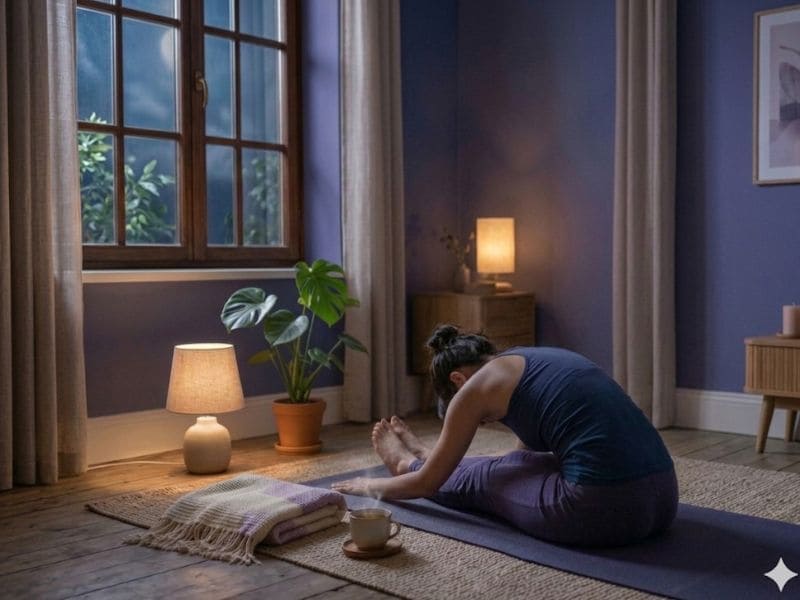
In today’s fast-paced lifestyle, many people struggle with poor sleep, stress, and insomnia. Long work hours, screen time, and daily stress can make it difficult for the body and mind to relax at night. If you often find yourself tossing and turning in bed, adding yoga for better sleep to your nightly routine may be the natural solution you need.
Yoga is not just a physical exercise. It is a powerful practice that connects the mind, body, and breath, helping to calm the nervous system and prepare the body for deep, restorative sleep.
In this guide, you will discover a simple bedtime yoga routine that works, along with the best yoga poses to improve sleep quality naturally.
Why Yoga Helps You Sleep Better
Yoga helps activate the parasympathetic nervous system, which is responsible for relaxation and recovery. When practiced before bedtime, yoga reduces stress hormones like cortisol and encourages the body to enter a calm and restful state.
Here are some key benefits of practicing yoga before bed:
Reduces stress and anxiety
Relaxes muscles and relieves tension
Improves breathing patterns
Calms the mind
Helps regulate sleep cycles
Even 10–15 minutes of gentle yoga at night can significantly improve sleep quality.
Best Time to Practice Night Yoga
The best time to practice bedtime yoga is 20–30 minutes before going to sleep.
Tips for best results:
Practice in a quiet and dimly lit room
Avoid intense or fast yoga flows
Focus on slow breathing and relaxation
Turn off screens at least 30 minutes before bed
This creates a peaceful environment that helps your body naturally transition into sleep mode.
6 Best Yoga Poses for Better Sleep
Below are some of the most effective relaxation yoga poses to include in your bedtime routine.
1. Child’s Pose (Balasana)
Child’s pose is one of the most relaxing yoga poses that helps calm the nervous system.
Benefits
Reduces stress and anxiety
Gently stretches the back and hips
Promotes relaxation
How to do it
Kneel on the floor and sit back on your heels
Extend your arms forward
Rest your forehead on the mat
Breathe deeply for 1–2 minutes
2. Legs Up the Wall Pose (Viparita Karani)
This pose is extremely beneficial for people who experience stress, fatigue, or insomnia.
Benefits
Improves blood circulation
Reduces swelling in legs
Relaxes the nervous system
How to do it
Lie down close to a wall
Raise your legs vertically against the wall
Keep your arms relaxed beside you
Stay in this position for 5 minutes
3. Seated Forward Bend (Paschimottanasana)
This pose stretches the spine and helps release tension from the body.
Benefits
Relieves stress and fatigue
Improves digestion
Calms the mind
How to do it
Sit with legs extended forward
Slowly bend forward toward your feet
Relax your neck and shoulders
Hold the pose for 1 minute while breathing deeply
4. Supine Twist (Supta Matsyendrasana)
Twisting poses help release tension in the spine and relax the nervous system.
Benefits
Improves spinal flexibility
Releases lower back tension
Promotes relaxation
How to do it
Lie on your back
Bend your knees and drop them to one side
Extend your arms outwards
Hold for 30 seconds and switch sides
5. Cat-Cow Stretch (Marjaryasana-Bitilasana)
This gentle movement releases tension in the spine and improves breathing.
Benefits
Relieves stress from the back and neck
Improves posture
Encourages deep breathing
How to do it
Start in tabletop position
Inhale and arch your back (Cow Pose)
Exhale and round your spine (Cat Pose)
Repeat for 1 minute
6. Corpse Pose (Savasana)
This final pose is essential for complete relaxation.
Benefits
Reduces anxiety
Calms the nervous system
Prepares the body for deep sleep
How to do it
Lie flat on your back
Relax your arms and legs
Close your eyes
Focus on slow breathing for 5 minutes
Simple 10-Minute Bedtime Yoga Routine
You can follow this quick night yoga routine every day.
Cat-Cow Stretch – 1 minute
Child’s Pose – 2 minutes
Seated Forward Bend – 2 minutes
Supine Twist – 2 minutes
Legs Up the Wall – 2 minutes
Savasana – 1 minute
Practicing this routine consistently can help improve your sleep quality, relaxation, and overall well-being.
Conclusion
If you struggle with stress, insomnia, or restless nights, practicing yoga for better sleep can make a powerful difference in your nightly routine. Gentle stretches, mindful breathing, and relaxation poses help calm the body and mind, making it easier to fall asleep naturally.
The best part is that you only need 10–15 minutes of bedtime yoga to experience the benefits. With regular practice, you may notice improved sleep, better mood, and increased energy during the day.
So tonight, roll out your yoga mat, slow down your breath, and allow your body to relax into a peaceful night’s sleep.
FAQs
1. Does yoga help improve sleep quality?
Yes, practicing yoga before bed helps relax the nervous system, reduce stress, and improve overall sleep quality.
2. What is the best yoga pose for sleep?
Legs Up the Wall and Child’s Pose are among the best yoga poses for relaxation and better sleep.
3. How long should I practice yoga before bed?
Practicing 10–15 minutes of gentle yoga before bedtime is enough to promote relaxation and prepare the body for sleep.
4. Can yoga help with insomnia?
Yes, regular yoga practice can reduce stress and anxiety, which are common causes of insomnia.
5. Is it okay to do yoga every night before bed?
Yes, a gentle bedtime yoga routine is safe and beneficial to practice every night.