

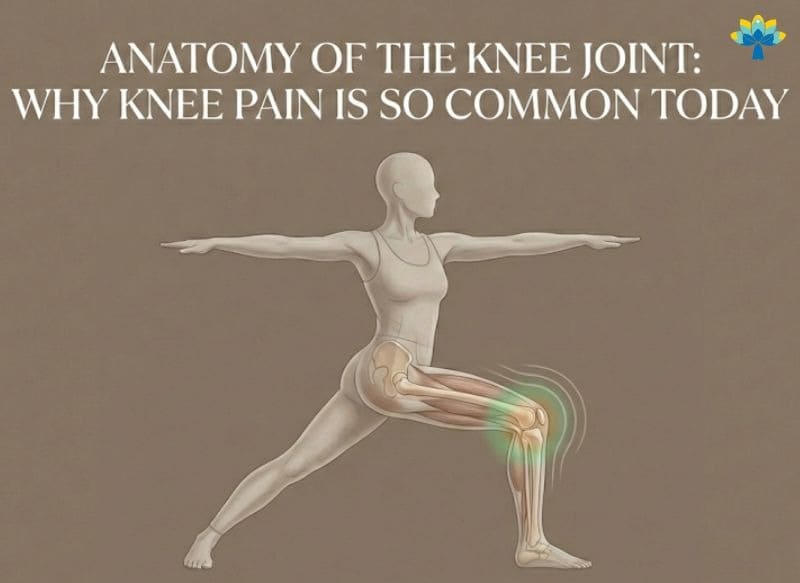
Knee pain has become one of the most common joint complaints across all age groups today. From young adults with desk jobs to seniors experiencing joint degeneration, knee discomfort affects daily movement, posture, and quality of life. To truly understand why knee pain is so widespread, we must first understand the anatomy of the knee joint and how modern lifestyle habits impact it.
This blog explains the knee joint in simple terms, explores why so many people suffer from knee pain today, and shows how gentle yoga and Yogalates practices can support knee health naturally.
Understanding the Anatomy of the Knee Joint
The knee is one of the largest and most complex joints in the human body. It connects the thigh to the lower leg and supports almost every movement we make—walking, sitting, standing, climbing, and exercising.
Main Structures of the Knee Joint
1. Bones
- Femur (thigh bone)
- Tibia (shin bone)
- Patella (kneecap)
These bones form the hinge that allows the knee to bend and straighten.
2. Cartilage
Cartilage cushions the bones and prevents friction. Over time, cartilage can wear down, leading to stiffness and pain.
3. Ligaments
Ligaments stabilize the knee:
- ACL & PCL control forward and backward movement
- MCL & LCL support side-to-side stability
4. Meniscus
Two crescent-shaped pads act as shock absorbers between the femur and tibia.
5. Muscles
The quadriceps, hamstrings, glutes, and calf muscles support knee movement and alignment.
Because the knee relies on so many structures working together, even a small imbalance can lead to pain or injury.
Why Is Knee Pain So Common Today?
Understanding why knee pain is so common today requires looking beyond injuries and aging. Many knee problems are caused by daily habits and movement patterns.
1. Sedentary Lifestyle & Prolonged Sitting
Long hours of sitting weaken the muscles that support the knee, especially the glutes and quadriceps. Weak muscles force the knee joint to take extra load, increasing wear and tear.
Poor sitting posture also tightens hip flexors, pulling the knee out of alignment.
2. Weak Hips and Ankles Affect Knee Alignment
The knee is a middle joint, meaning it depends on the hips above and ankles below. Limited hip mobility or weak ankle stability can transfer stress directly to the knee joint.
This is why knee pain often persists even when the knee itself is treated.
3. Excess Body Weight & Joint Pressure
The knee absorbs 3–5 times body weight during daily movements like walking or climbing stairs. Even small weight gain increases joint pressure, accelerating cartilage breakdown.
4. Overtraining & High-Impact Workouts
Running, jumping, deep squats, and intense fitness routines without proper alignment can overload the knee joint. Many people unknowingly push through pain, leading to chronic knee issues.
5. Poor Movement Awareness
Locking the knees, incorrect walking patterns, and improper exercise form are common habits that slowly damage knee structures over time.
6. Aging & Natural Joint Changes
As we age, cartilage loses elasticity, muscles weaken, and joint lubrication decreases. Without supportive movement, these changes can result in stiffness, inflammation, and pain.
Common Knee Problems Linked to Poor Knee Mechanics
- Patellofemoral pain (runner’s knee)
- Osteoarthritis
- Ligament strain
- Meniscus irritation
- Knee stiffness and swelling
Most of these conditions are not caused by a single injury, but by repetitive stress and poor joint support.
How Yoga & Yogalates Support Knee Health
Unlike high-impact workouts, yoga and Yogalates focus on controlled, mindful movement that supports joint health rather than stressing it.
Benefits of Yoga for Knee Pain
- Strengthens muscles around the knee
- Improves hip and ankle mobility
- Enhances joint lubrication
- Encourages proper alignment
- Reduces inflammation through stress reduction
Yoga teaches how to move, not just how much to move.
Gentle Yoga for Bad Knees
If you experience knee discomfort or want to protect your joints, gentle movement is essential.
Watch this guided “Yoga for Bad Knees” video, designed to:
- Support knee anatomy safely
- Strengthen surrounding muscles
- Improve mobility without strain
- Encourage pain-free movement
This Yogalates-based practice focuses on alignment, breath awareness, and joint-friendly transitions, making it ideal for beginners and those with knee sensitivity.
Simple Tips to Protect Your Knees Daily
- Avoid locking knees while standing
- Strengthen hips and glutes
- Sit with feet flat and knees aligned
- Choose supportive footwear
- Practice low-impact movement regularly
- Stretch tight muscles around hips and calves
Small daily adjustments can significantly reduce knee strain.
Support Knee Health with Safe, Joint-Friendly Movement
Understanding the anatomy of the knee joint helps explain why knee pain is so common today. Weak muscles, poor movement patterns, and daily lifestyle habits often place extra stress on the knees. Practicing joint-friendly yoga and strengthening exercises can improve mobility, reduce discomfort, and support long-term knee health.
Frequently Asked Questions
1. Why is knee pain so common today?
Knee pain is common due to sedentary lifestyles, poor posture, muscle imbalances, excess weight, and high-impact exercises without proper alignment.
2. Can yoga help knee pain?
Yes. Gentle yoga strengthens muscles, improves joint alignment, reduces stiffness, and supports knee health safely.
3. Is knee pain always related to aging?
No. Many young adults experience knee pain due to poor movement habits, weak muscles, and prolonged sitting.
4. Should I exercise if I have knee pain?
Yes, but choose low-impact and joint-friendly exercises like yoga and Yogalates instead of high-impact workouts.
5. How often should I practice yoga for knee health?
Practicing 3–5 times per week can help improve mobility, strength, and reduce knee discomfort.
Conclusion
The knee joint is a powerful yet vulnerable structure that depends on balanced movement, strength, and alignment. Understanding the anatomy of the knee joint helps explain why knee pain is so common today—and why quick fixes often fail.
By choosing mindful practices like yoga and Yogalates, you can support your knees naturally, improve mobility, and build long-term joint health.
Your knees carry you through life—treat them with awareness and care.